

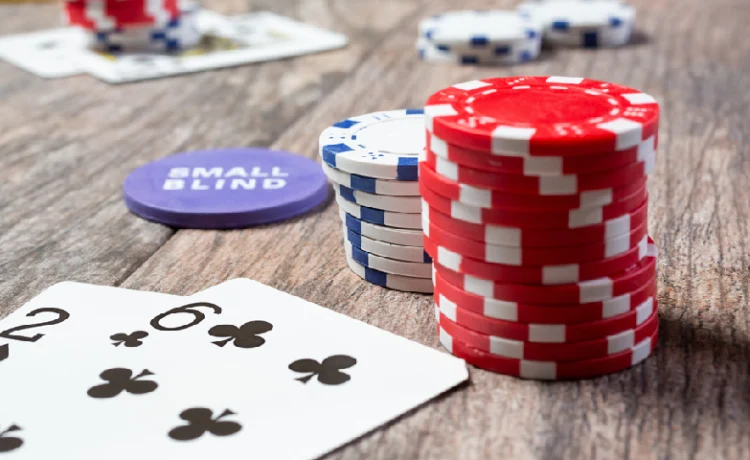
Poker has evolved from a casual card game into a global phenomenon that blends strategy, mathematics, psychology, and risk management. Far from being a game of luck, poker demands the same analytical precision found in high-stakes investing, behavioral science, and advanced decision theory. Understanding its intricate layers can transform a casual player into a calculated strategist capable of reading opponents and controlling outcomes over time.
The Essence of Poker: More Than Just a Game
Poker is a game of skill, probability, and strategic foresight. While chance determines which cards you’re dealt, your long-term success depends on how effectively you play those cards in different contexts. This balance between luck and skill is what has made poker one of the most studied games in cognitive science and economics.
The game teaches players to make decisions under uncertainty, evaluate risk-to-reward ratios, and apply game theory concepts to real-world decision-making. These skills extend beyond the felt table into business negotiations, stock trading, and competitive environments.
Understanding the Structure and Mechanics
Every variant of poker—whether Texas Hold’em, Omaha, or Seven-Card Stud—follows the same foundational structure:
- Blinds or antes initiate the pot.
- Hole cards are dealt to each player.
- Community or shared cards (in some formats) are revealed in multiple rounds.
- Players use these cards in combination with their private cards to form the best hand.
The hand rankings remain consistent across variations, ranging from Royal Flush (the highest) to High Card (the lowest). Yet, beyond this structure, the mastery lies in how players interpret the situation and opponents.
Strategic Depth: Skill Over Chance
A successful poker player approaches the game through a lens of statistical reasoning and psychological manipulation. Strategy is not about memorizing plays but adapting dynamically to opponents’ patterns.
Key Elements of Strategic Play
- Position Awareness
- Being “on the button” or in late position offers a tactical advantage since you act after your opponents.
- The later your position, the more information you have to shape your decision.
- Pot Odds and Expected Value (EV)
- Pot odds compare the potential gain of a call to the likelihood of completing a winning hand.
- Understanding expected value ensures you make decisions that are profitable in the long run, not just emotionally satisfying.
- Table Image and Meta-Game
- The perception others have of you—tight, aggressive, or loose—directly affects how they play against you.
- Experienced players manipulate this image, sometimes acting weak when strong or vice versa.
- Range Thinking
- Instead of assigning a single hand to an opponent, skilled players assess a range of possible hands.
- This analytical approach allows better predictions and reduces mistakes caused by emotional bias.
The Psychological Edge in Poker
Poker is as much about mind reading as it is about cards. Understanding human behavior, emotional control, and cognitive biases gives professionals a measurable edge.
Reading Opponents
Subtle cues—such as micro-expressions, timing tells, or betting patterns—reveal the confidence level of a player’s hand. Skilled players train themselves to observe these patterns without revealing their own emotional state.
Emotional Regulation
The phenomenon of tilt—emotional decision-making after a bad beat—is the greatest enemy of long-term success. Professionals employ techniques from sports psychology such as deep breathing, mindfulness, and cognitive reframing to stay in control.
Bluffing as a Psychological Weapon
Bluffing isn’t random; it’s a calculated risk based on an opponent’s tendencies, table dynamics, and betting history. The best bluffs are believable narratives that fit previous betting actions.
The Mathematics Behind the Game
The foundation of poker strategy lies in probability theory and expected value computation. Players continuously evaluate how often they will win a hand if they continue betting.
Probability and Combinatorics
- The likelihood of flopping a flush draw in Texas Hold’em is 10.94%, while completing it by the river rises to 35%.
- Understanding such probabilities helps determine whether to fold, call, or raise.
Game Theory Optimal (GTO) Approach
GTO is a balanced strategy where your plays cannot be easily exploited by others. It relies on mixed strategies—playing certain hands both aggressively and passively to remain unpredictable.
- While GTO minimizes losses against strong opponents, exploitative play maximizes profits against weaker ones by adjusting based on their mistakes.
Poker as a Reflection of Real-World Decision Making
Poker mirrors real-world uncertainty. Business leaders and investors often study poker to improve risk management, emotional resilience, and analytical decision-making.
Lessons from Poker Applied Beyond the Table
- Investment Strategy: Evaluating pot odds parallels assessing investment risks.
- Negotiation: Reading an opponent’s body language mirrors interpreting negotiation cues.
- Behavioral Economics: Poker demonstrates cognitive biases like overconfidence and loss aversion in real time.
These parallels show why poker is more than entertainment—it’s a mental discipline that sharpens the ability to make profitable decisions under pressure.
Advanced Techniques for Experienced Players
As players move beyond the basics, mastering multi-level thinking becomes essential.
Level Thinking Framework
- Level 1: What do I have?
- Level 2: What does my opponent have?
- Level 3: What does my opponent think I have?
- Level 4 and beyond: Recursive reasoning layers that determine bluff frequency and bet sizing.
Bet Sizing Strategies
Bet sizing communicates strength or weakness. Consistent sizing disguises hand strength, while variable sizing manipulates opponent perception. Professionals balance value bets and bluffs in proportional frequencies to remain unpredictable.
Data-Driven Play
Modern poker incorporates data analytics and solver software to simulate millions of hand outcomes. While live poker depends more on psychology, online players leverage data to optimize frequencies and decisions.
Building Long-Term Success in Poker
Winning consistently in poker is about discipline, adaptability, and data-driven reflection.
- Maintain a detailed record of every session, noting decisions and outcomes.
- Regularly review mistakes and patterns to refine your strategy.
- Control emotional swings through structured bankroll management.
Bankroll Management Essentials
- Never risk more than 5% of your total bankroll in a single game.
- Separate poker funds from personal finances.
- Gradually move up stakes only when you’ve proven profitability at the current level.
Common Mistakes Even Skilled Players Make
Even advanced players fall into predictable traps:
- Overvaluing top pair without considering board texture.
- Calling too often when fold equity would yield higher long-term value.
- Ignoring position in pursuit of speculative hands.
- Failing to adapt to changing table dynamics.
Learning to identify and eliminate these leaks can dramatically increase profitability over time.
Technology and the Future of Poker
The poker landscape continues to evolve with technology. Artificial intelligence, machine learning, and data solvers are reshaping how players study and refine strategies.
- AI-driven training tools simulate opponent tendencies and test decision-making accuracy.
- Online tournaments have expanded accessibility, creating a global player pool with unprecedented diversity.
Still, despite the rise of digital poker, live play retains its prestige due to its human element of psychology and interpersonal reading—something technology can replicate only partially.
FAQs
Q1: What is the single most important skill in poker?
The ability to make consistent, rational decisions under uncertainty. While probability and psychology matter, emotional control determines who lasts long-term.
Q2: How do professionals handle losing streaks?
They treat variance as an inevitable part of the game. By maintaining strict bankroll discipline and focusing on decision quality over short-term results, they minimize psychological damage.
Q3: Can someone make a living playing poker today?
Yes, but it requires a business-like approach involving study routines, financial management, and mental training. Many professionals diversify by teaching, streaming, or investing in related ventures.
Q4: How has AI changed poker strategy?
AI has deepened understanding of optimal frequencies and balance. Players now train against solvers to minimize exploitable weaknesses, creating strategies that resemble GTO models.
Q5: What separates amateur players from experts?
Experts view poker as a long-term investment in decision quality, not as gambling. They study mathematics, psychology, and self-control with equal dedication.